Early signs of hair thinning are easy to miss. You may see more hair on your brush. Your hair might feel weaker or look thinner. Noticing these changes early can help you act before hair loss gets worse.
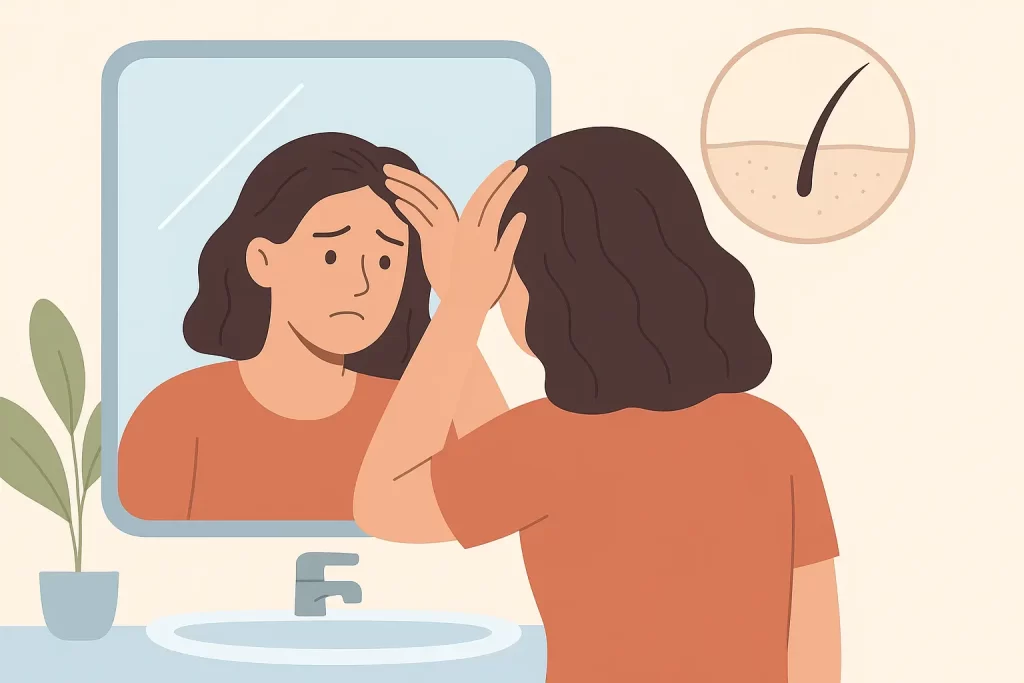
Small changes can show up in your daily routine. Your part may look wider, or your scalp might show through more than before. Strands may feel finer or break more easily. These are all signs that your hair needs attention.
Real Simple explains that spotting these early signs matters. By watching for extra shedding or changes in texture, you can take steps to protect your hair. Acting early can help slow down thinning and keep your hair healthier.
Table of Contents
Understanding the Early Symptoms of Hair Thinning
Noticing hair changes early can save you stress later. Thinning usually starts slowly. You may feel your hair is lighter, weaker, or less full. These subtle shifts are often easy to miss at first.
Why Catching Hair Thinning Early Matters
Spotting changes early gives you more options. You can adjust your hair care routine, improve your diet, or manage stress. Early action can slow down further thinning. It also helps maintain your confidence while you deal with hair changes.
How Hair Follicles Change Over Time
Hair thinning happens when follicles shrink. This makes new hairs thinner and shorter. Over time, some follicles may stop producing new hairs. That’s why small changes in texture or volume can be an early warning.
How to Spot Hair Thinning in Everyday Life
Hair thinning often shows up in small ways. You might notice more hair on your pillow or in the shower drain. Your ponytail may feel lighter than before. Even small changes in hair texture or shine can be a sign.
Pay attention to your part line. A widening part or more visible scalp can say less hair density. Check your temples and crown—these areas often thin first.
Daily routines can reveal subtle signs too. Brushing or styling can show breakage or shedding. Noticing these patterns early can help you. You will see what is normal. You will also know what needs attention.
First Signs of Hair Thinning You Might Overlook
Some signs of hair thinning are easy to miss. Your hair may feel less full than before. You might notice more hair on your brush or pillow.
Changes in hair texture can also be a clue. Hair may become finer, weaker, or more brittle. You may notice small patches of thinner hair. This often happens at the temples or crown.
Even small changes in how your hair behaves can matter. Pay attention to breakage, slower growth, or parts that look wider. Noticing these early can help you act before thinning gets worse.
Common Causes Behind the Signs You Are Losing Hair
Hair thinning can happen for many reasons. Hormones play a big role. Conditions like thyroid problems or PCOS can affect hair growth.
Nutrient deficiencies may also cause hair loss. Lack of iron, vitamin D, or protein can make hair weaker. Stress and sudden weight changes can trigger shedding too.
Certain hairstyles and treatments can harm hair as well. Tight braids, harsh chemicals, and heat styling can all contribute. Knowing the cause helps you take the right steps to protect your hair.
What to Do If You Notice Early Signs of Hair Thinning
Taking action early can help slow down hair thinning. Small changes in daily habits can make a difference.
Lifestyle and Diet Adjustments
Eating a balanced diet supports hair health. Eat foods with protein and iron. Take vitamins like B and D. Manage stress with sleep, exercise, or relaxation.
When to See a Dermatologist
If thinning continues or worsens, see a dermatologist. They can check for underlying conditions and suggest treatments. Early consultation can prevent further hair loss.
Gentle Hair Care Practices
Be gentle when washing and styling hair. Avoid harsh chemicals, tight hairstyles, and excessive heat. Use mild shampoos and conditioners to keep hair strong.
Conclusion — Recognizing and Acting on Early Hair Thinning
Recognizing early hair thinning can help a lot. Small changes in hair texture, volume, or shedding show you what to watch. Acting early can protect your hair and confidence.
If your hair thinning is at a stage of no return, non-surgical hair replacement can help. Hair systems are attached to your scalp. They give a natural, full look without surgery. Book a consultation today to restore your hair and confidence.