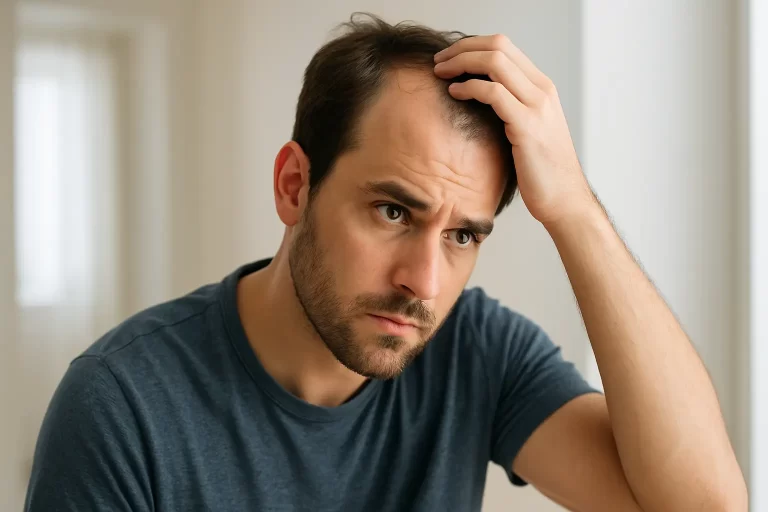
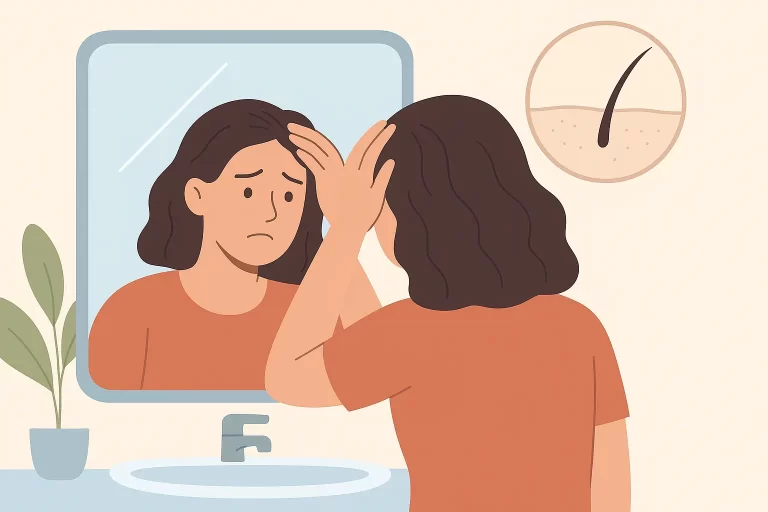
Hair loss in 20s can feel unfair. You’re young, just getting started—and then your hairline starts creeping back, or you spot extra strands in the shower. It’s easy to panic. But here’s the truth: it’s more common than most people think. And no, it’s not always your fault.
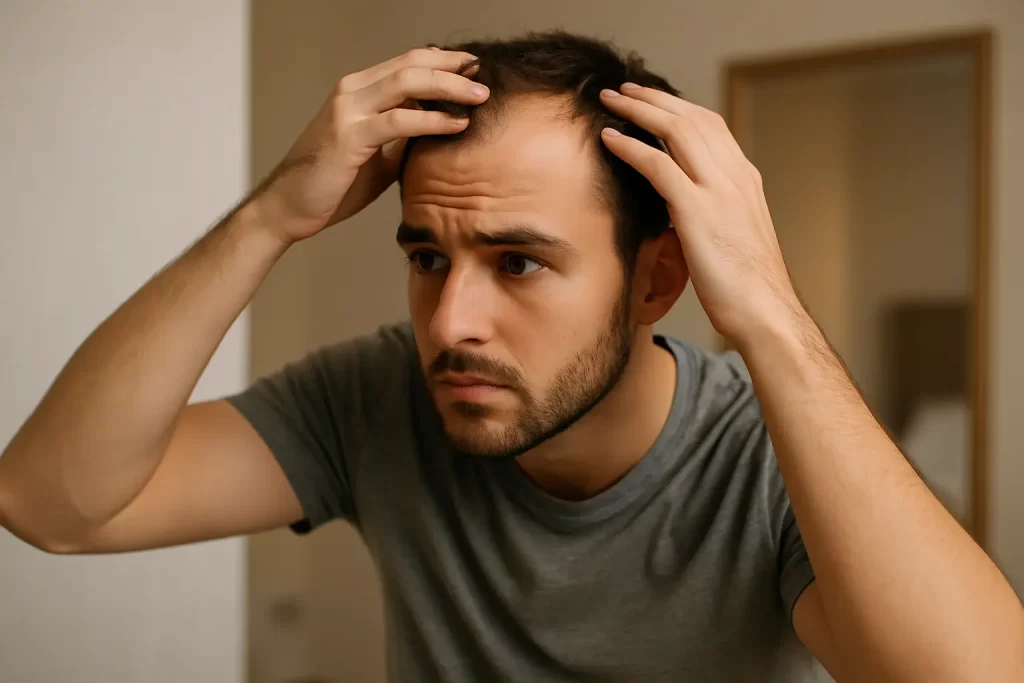
More and more Gen Z adults are facing the same issue. A report by the Indian Express says stress, diet, and lifestyle are causing hair loss at a younger age. This isn’t rare, it’s real, and you’re not alone.
Why Is This Happening So Early?
Hair loss in your 20s can feel unfair. You’re young, healthy, and still figuring life out, so why is your hairline already changing?
There isn’t just one reason. For some, it’s genetics. If your parents or grandparents had early hair loss, chances are you might too. But lifestyle matters more than most people think. Long hours. Little sleep. Crash diets. Too much stress. All of it takes a toll on your body, and your hair.
And then there’s grooming. Harsh products, heat styling, and tight hairstyles can weaken your roots over time. It doesn’t happen overnight. But it adds up.
Why Is Hair Loss Happening Earlier Than Before?
More people in their 20s are seeing their hair thin out, and it’s not just genetics anymore. Today’s lifestyle is fast and demanding. People sleep less, eat poorly, and stay stressed more often. These changes mess with your hormones and your health, including your hair.
Add to that city pollution, harsh water, and overuse of hair products, it’s a tough environment for your scalp. Another reason it feels more common now? Awareness. We notice it earlier. We talk about it more. What was once brushed off as “just a bad hair day” is now a real concern for a lot of young people.
What’s Causing Hair Loss in Your 20s?
There’s no one reason. Hair loss at this age usually comes from a mix of factors — some you can control, some you can’t.
1. Genetics: If hair thinning runs in your family, there’s a good chance you’ll see signs early too. It doesn’t always wait until your 40s.
2. Hormones & DHT: Dihydrotestosterone (DHT) is a hormone linked to male pattern baldness. In some people, hair follicles are more sensitive to it — causing them to shrink and stop growing hair.
3. Medical Conditions: Problems like thyroid imbalance or autoimmune diseases can cause hair loss. Even certain medicines might trigger it without warning.
4. Poor Scalp Health & Overstyling: Tight hairstyles can pull on your roots. Heat tools and harsh products damage the hair. Over time, this leads to thinning. When the scalp gets inflamed or damaged, hair struggles to grow.
5. Stress, Sleep, and Nutrition: Crash diets. Erratic sleep. High cortisol from nonstop stress. Your hair is often the first thing to suffer when your body’s under pressure.
The good news? Once you know what’s behind the hair fall, you can start doing something about it.
What Can You Do About It? (H2)
Hair loss in your 20s feels unfair, but you’re not powerless. Here are three paths you can start exploring.
Start with Basics: Fix the Foundation
Before trying advanced treatments, focus on what you can control. Small changes can make a real difference.
- Eat better. Add more protein, iron, zinc, and healthy fats.
- Sleep enough. 7–8 hours each night helps your body repair and grow.
- Care for your scalp. Use mild shampoos. Avoid buildup. Don’t skip washes.
- Lower stress. Walks, exercise, less screen time — whatever helps you breathe easier.
These habits don’t give overnight results. But they create the base for every other solution to work better.
Medical and Dermatological Options
If you’ve been trying the basics with no results, you might want to look into medical treatments. Always consult a dermatologist first.
- Minoxidil (Rogaine). A topical treatment that may slow loss or help regrowth.
- Finasteride. A pill that blocks DHT, the hormone linked to male pattern baldness.
- Microneedling or PRP therapy. These stimulate hair follicles and improve blood flow.
- Blood tests. If something deeper is going on (like a thyroid issue), tests can catch it.
These options have pros and cons. Some come with side effects. Don’t self-diagnose — get expert advice before starting anything.
The Role of Hair Systems: A Real, Modern Option
Want fast results without surgery or pills? Try a hair system. It’s safe, non-medical, and gives you fuller hair right away.
- Zero recovery time. You walk in, walk out with fuller hair.
- No pills or needles. No health risks, no waiting months.
- Looks real. Feels natural. Today’s systems blend so well that even close friends can’t tell.
- Used by Gen Z, not just older men. More young people are choosing this route to stay confident without pressure.
This isn’t a last resort. It’s just one of many valid options — and one that gives control back to you.
It’s Not a Crisis — It’s a Choice
Hair loss in your 20s can feel unfair. Like your body skipped a few steps. But here’s the thing — it’s not the end of your story. It’s just a new chapter.
Plenty of people go through it. Quietly. Early hair loss isn’t a flaw or failure. It’s biology, stress, and sometimes just bad luck.
But you still have control.
You can
- improve your lifestyle
- explore treatment options
- or choose a hair system and move on with confidence
None of these paths are wrong. What matters is how you want to feel when you look in the mirror.
This isn’t about “fixing” yourself. It’s about feeling like yourself again.
Need Help Choosing What’s Right for You?
Hair loss in your 20s can feel like a lot. There are so many options, it’s hard to know where to start.Should you change your diet? Try medication? Consider a hair system? There’s no one-size-fits-all answer, and that’s okay.
If you’re unsure where to begin, we’re here to help. Our non-surgical hair replacement solutions are safe, natural-looking, and tailored to your lifestyle. Book a free consultation, no pressure, just honest guidance. Let’s find what works best for you.